No. 04 Distraction Fallacies
Slippery Slope
In Turkish: Felaket Tellallığı Safsatası
One cookie today, diabetes tomorrow, the apocalypse by Thursday. Hit the brakes.
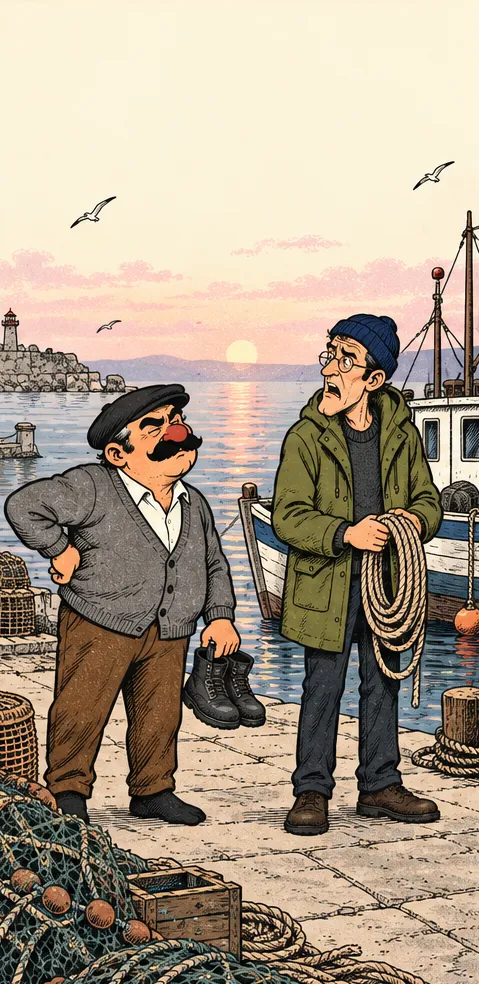
I’m not taking the boat out today, my back’s gone stiff.
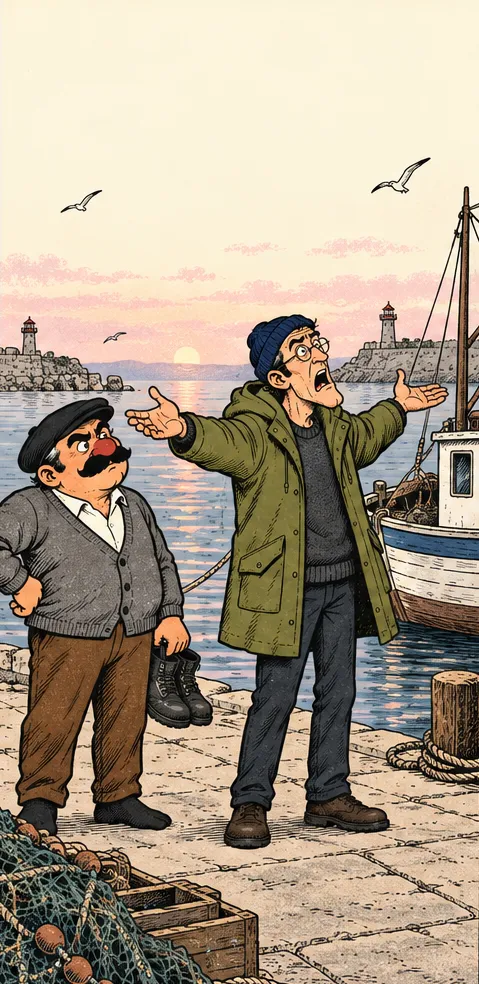
Not today, not tomorrow, in a month the nets rot, the boat sinks and the anchovies forget you!
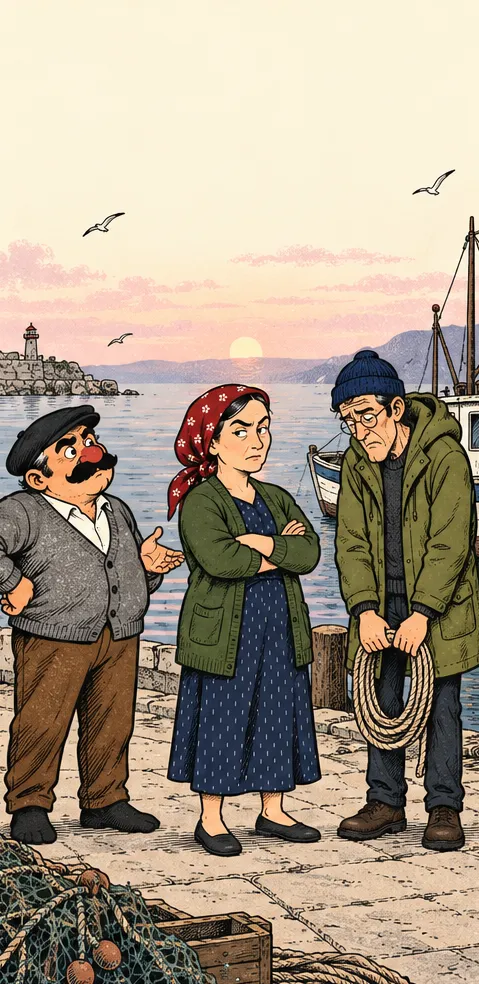
He said one day. Where did the anchovies come from?
What is it?
Claiming that a small step will lead, link by link and with no evidence for any link, to a terrible end. Each link is a “could”; multiply enough “coulds” and you don’t get a “will”.
The pattern
- If we do A, B will happen.
- If B, then C… all the way to Z.
- Z is a catastrophe.
- So don’t do A.
Why it fails
Every link in the chain is a separate claim, and none of them comes with evidence. Stack ten seventy-percent “coulds” and the odds drop to about three percent; the fallacy sells it as a certainty. Fear stands in for arithmetic.
How to spot it
- One small proposal, followed by a chain of “and then… and then… and then…”.
- Nobody explains why the intermediate steps would happen. They’re just stated.
- The conversation is about the catastrophe at the end, not the proposal at the start.
What to say
Break the chain: “OK, how do we get from A to B? How likely is that, and what would stop it?” It usually collapses at the second link. Also set the limit yourself: “Just today. Tomorrow I’m going.”
When it’s not a fallacy
Some slopes really are slippery. If you can show the probability of each step and explain how one triggers the next, that isn’t a fallacy; it’s a risk assessment. The difference is between saying “it will happen” and saying “it will happen for this reason, with this likelihood”.
Examples
- Family“One more episode before bed.” Reply: “Then two, then till morning, then you drop out of school.”
- Work“Let’s work from home on Fridays.” Reply: “Then nobody comes in, then the company folds.”
- School“Allow a formula sheet in the exam.” Reply: “Then open book, then no exam, then we hand out diplomas at the door.”
- Tech“Twenty minutes of cartoons on the tablet.” Reply: “They get used to it, they get addicted, their whole life is a screen.”